How to Choose Your Main Profile Photo
By Chris Kerger · August 2026
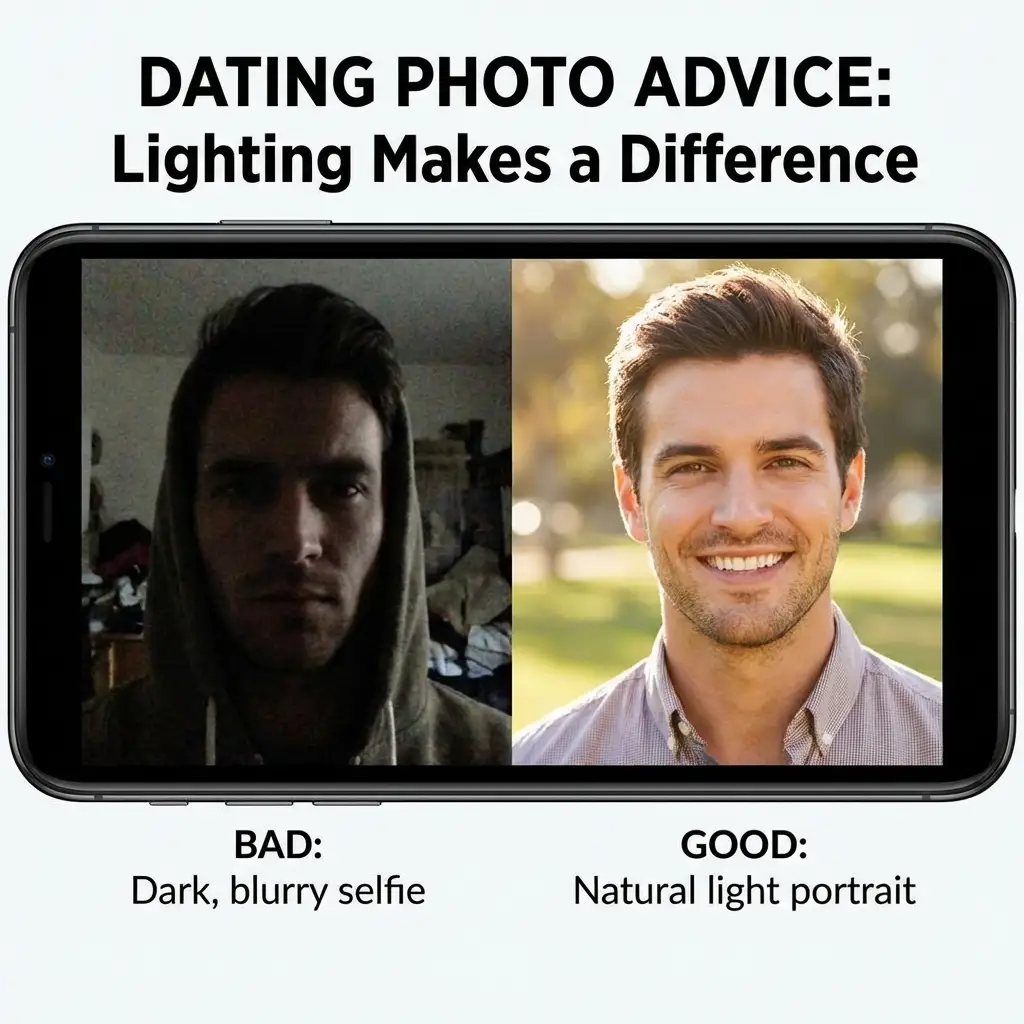
Your main photo does more work than the rest of your profile combined — on Tinder it is often the only photo seen before the swipe. Yet most people choose it by feel, which means by flattery. Here is a repeatable way to choose it by evidence.
What the main photo actually has to do
It has three jobs, in order: be instantly readable as a face (thumbnails are small), answer “would I trust this person on a date?”, and give a reason to look at photo two. Attractiveness matters, but it is the tiebreaker — not the job.
The four pass/fail criteria
- Face first. Your face fills enough of the frame to read at thumbnail size, eyes visible, no sunglasses.
- Solo. No “which one are they?” puzzle. Group photos live in slots 3–5.
- Light over looks. Daylight or window light. A clean photo of a normal day beats a dark photo of your best night — the free checker scores this in seconds.
- Recent. Taken in the last 12 months. Not negotiable; see the red flags that cost matches.
Step 1: shortlist three, not one
Pick your best headshot-style photo, your best activity photo, and your best dressed-up photo. Choosing among types beats ranking twenty near-identical candidates — and the winner is frequently not the one you would have picked, which is the point.
Step 2: the technical pass
Run all three through the photo quality checker. Free, in your browser, and it kills the silent losers: too dark, slightly soft, landscape-cropped. There is no argument to win with a photo that fails here — apps compress and crop aggressively, and a weak file only gets weaker.
Step 3: the human pass
Get the survivors rated and read the pattern, not just the total:
High attractive + high trustworthy → your main photo. Done.
High attractive + low trustworthy → strong photo two. As a lead it earns swipes that never message.
Modest attractive + high trustworthy + high fun → excellent lead for relationship apps like Hinge.
Scores settle after roughly ten votes — the stability data shows why comparing photos at three votes each misleads.
One main photo per app?
Ideally, yes. Tinder rewards the boldest readable photo; Hinge rewards warmth because photos sit beside prompts; Bumble punishes a lead that gives her nothing to message about. Same shortlist, different winner per app is a common — and correct — outcome.
The three classic mistakes
Choosing your most flattering photo. Flattery optimizes for the mirror; the main photo optimizes for a stranger’s split-second read. Asking friends. They rank the photo that looks most like the you they know — strangers have no such anchor. Never re-testing. Your face, hair and wardrobe change; re-run the comparison every six months or after any big change.
Frequently asked questions
Should my main dating photo be a headshot?
Usually — a clear head-and-shoulders photo reads best at thumbnail size. But test it: activity shots sometimes win on trustworthiness, which converts better on relationship apps.
How many votes do I need before trusting a photo comparison?
About ten per photo. Below that, scores swing too much to compare fairly — our vote stability data shows where scores settle.
Can I use the same main photo on Tinder, Hinge and Bumble?
You can, but the best performer often differs per app — Tinder rewards bold and readable, Hinge rewards warmth, Bumble rewards a lead that invites a message.
Let the data pick your main photo
Shortlist three, test them, lead with the winner. Free, anonymous, rated by real people.
Test My Photos Free